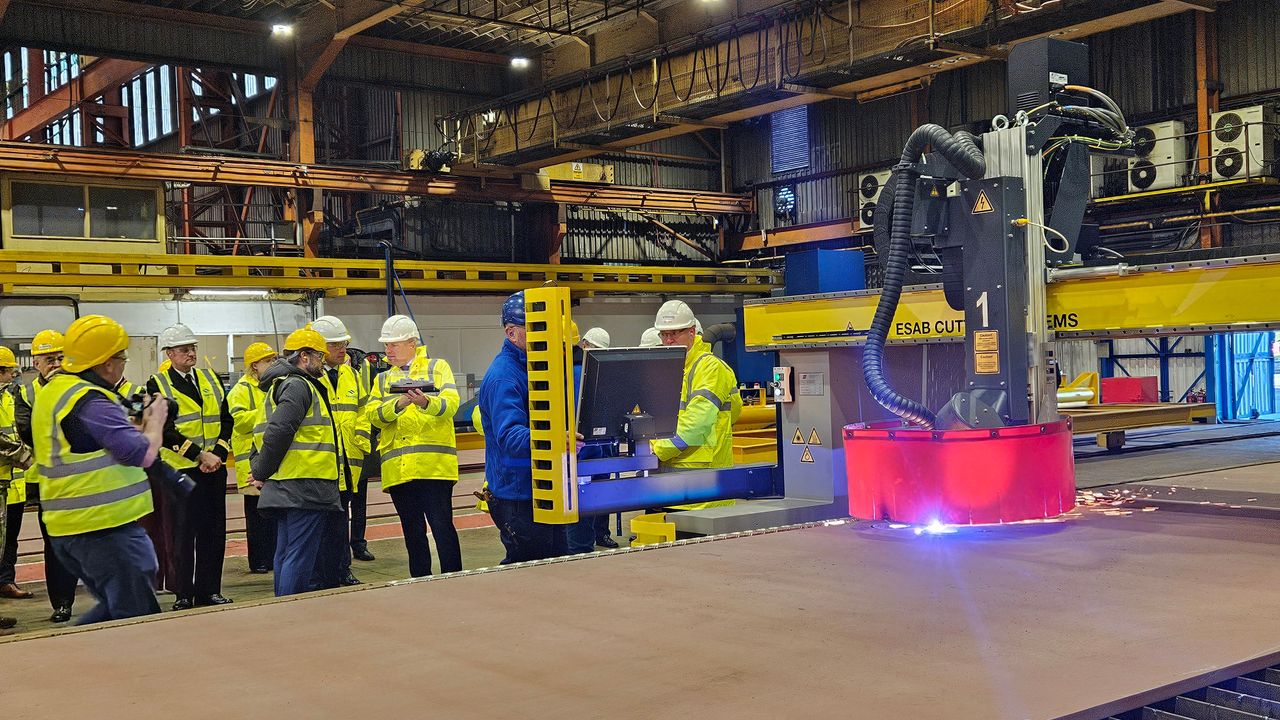
Navantia UK marked a major milestone in the UK’s Fleet Solid Support (FSS) programme on Wednesday with a traditional steel-cutting ceremony at the company’s Appledore shipyard in North Devon, officially launching construction of the first vessel, named RFA Resurgent.
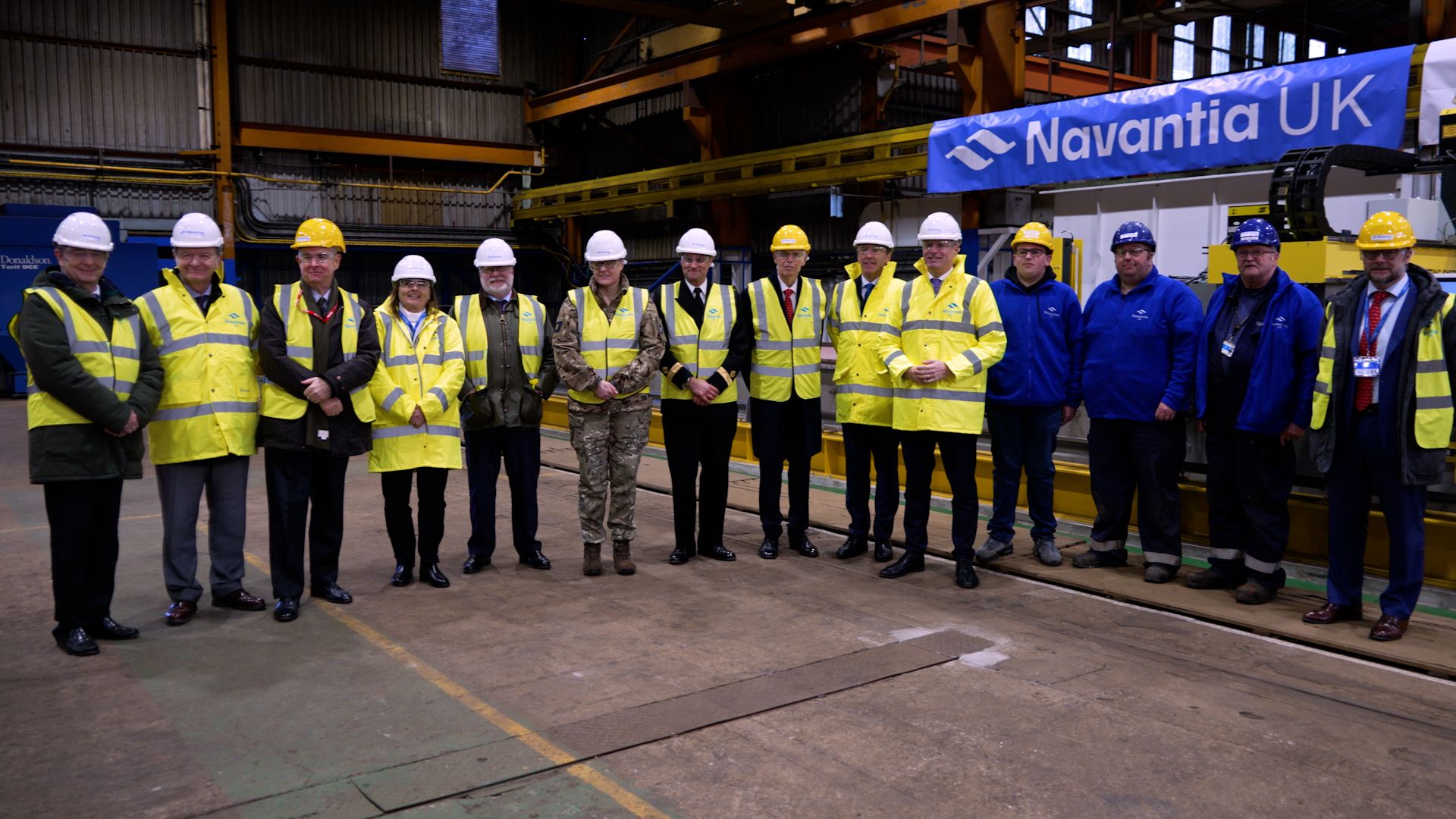
The ceremony on December 3 was led by Minister for Defence Readiness and Industry Luke Pollard, and attended by representatives from the Ministry of Defence Equipment & Support (DE&S), the Royal Fleet Auxiliary (RFA), the Royal Navy, industry partners, apprentices and local suppliers.
The event marks a significant step in the £100 million investment spanning Navantia UK’s operations in Appledore and Belfast. The bow sections of the ships—consisting of three blocks—will be constructed at the North Devon yard.
Next-generation support ships
Each FSS vessel will measure 216 meters, roughly the length of two Premier League football pitches, and will deliver munitions, spare parts, food and other critical supplies to Royal Navy vessels at sea, allowing the fleet to sustain prolonged operations without returning to port.

Donato Martinez, CEO of Navantia UK, said the milestone reflects “tireless work across our yards,” adding that the programme is delivering both a vital capability for the Royal Fleet Auxiliary and long-term industrial benefits for the UK through investment in infrastructure, technology and skills.
Pollard said the shipbuilding effort is generating more than 1,200 skilled jobs across Devon, Belfast and other regions, reinforcing defence as “an engine for growth.”
Commodore Sam Shattock of the RFA highlighted the ship’s modern design, environmental standards and importance to future maritime operations. “A true warfighting enabler for the Royal Navy of tomorrow,” he said.
Industrial revitalisation across multiple yards
Final assembly and construction of the mid-sections will take place at Harland & Wolff in Belfast, which is undergoing major modernisation including new robotic systems, digital integration tools and automated production lines.
Navantia UK’s investment across its four sites—Appledore, Belfast, Arnish and Methil—is among the UK’s most extensive industrial revitalisation efforts. The company plans to expand its workforce to 1,500 by 2029–30, rising to 2,000 in the early 2030s. Today, it employs 222 apprentices, representing 20% of its workforce.
Ricardo Dominguez, Chairman of Navantia, emphasized the significance of UK-Spain industrial cooperation, calling it a strong response to shared European security challenges.
The programme recently passed its Critical Design Review (CDR), allowing production of the three ships to formally begin. The review assessed structural integrity, environmental compliance, risk management and military systems integration.
About the FSS programme
The three FSS ships will be the RFA’s next-generation solid stores replenishment vessels—the largest UK military ships apart from aircraft carriers. They are designed to sustain Royal Navy carrier strike operations and wider global maritime missions.
The programme aims to simultaneously deliver new operational capability and rebuild sovereign UK shipbuilding capacity through technology transfer from Spain’s Navantia SA, the modernisation of multiple British shipyards and long-term workforce development.