



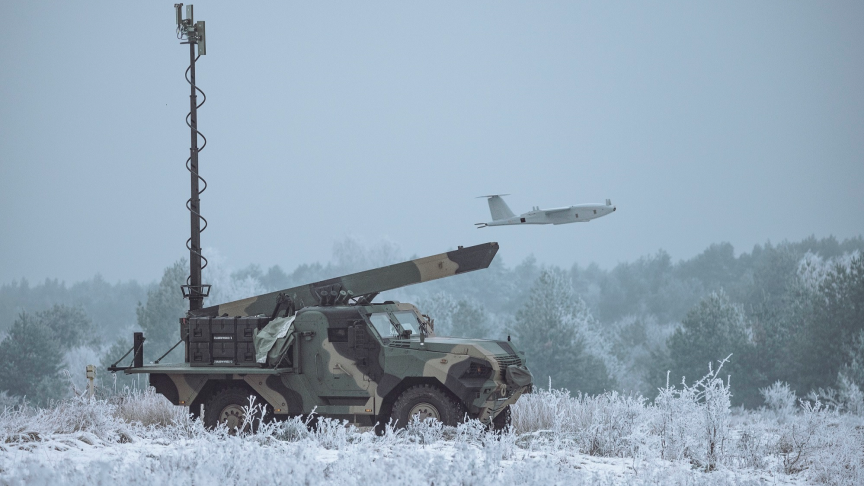
WB GROUP and Saab have signed a new agreement aimed at strengthening industrial cooperation and advancing unmanned, C4ISR, and autonomous defense capabilities across NATO’s Eastern Flank and the Baltic Sea region.
The agreement was signed in Gdynia on 29 June during the event surrounding Poland’s Orka submarine program contract signing, marking a broader push to deepen Polish-Swedish defense industrial alignment.
The cooperation framework focuses on joint development and integration of unmanned reconnaissance and strike systems, C4ISR solutions, and autonomous platforms designed to improve interoperability between Poland, Sweden, and allied NATO forces.
Focus on unmanned systems and battlefield interoperability
Under the agreement, WB GROUP and Saab will combine their respective expertise in unmanned systems, command-and-control technologies, and autonomous platforms. Key areas of cooperation include WB GROUP’s GLADIUS reconnaissance and strike system, future manned-unmanned team concepts, and autonomous unmanned surface vessels.
“@WBGroup_PL and @Saab are expanding their industrial and research and development cooperation, focusing on projects that will strengthen defence capabilities and military interoperability across the Baltic Sea region. Under the agreement, the companies will focus their… pic.twitter.com/tlLEJwaXQE
— WB GROUP (@WBGroup_PL) June 30, 2026
A central objective is the adaptation of the GLADIUS system for Swedish operational requirements. The system, already in service with the Polish Armed Forces, has demonstrated NATO interoperability during multinational exercises, including Baltic Shield, where it operated alongside allied forces.
Modular, NATO-compatible architecture
The companies emphasized that WB GROUP systems are built on open architecture and modular design principles, enabling integration with national C5 systems and adaptation to evolving operational requirements. This approach allows partner nations to incorporate domestic industry components while maintaining full NATO compatibility.
The cooperation is expected to contribute to enhanced interoperability across NATO’s Eastern Flank, supporting broader European defense initiatives such as the European Defence Project of Common Interest (EDPCI) Eastern Flank Watch.
Strengthening European defense industrial cooperation
The partnership also reflects a wider trend of increased industrial collaboration within Europe’s defense sector, particularly in unmanned systems and networked battlefield capabilities.
Both companies are expected to explore further joint development opportunities in unmanned reconnaissance, strike systems, and maritime autonomous platforms, reinforcing regional defense resilience and technological sovereignty.