



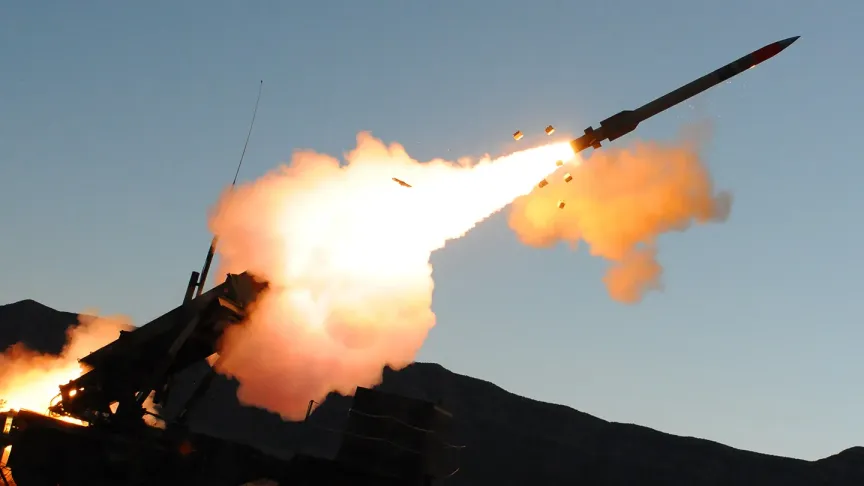
Ukraine is seeking to cooperate with Japan’s Mitsubishi Heavy Industries on the future production of Patriot air defense missiles, following indications from U.S. President Donald Trump that Washington is prepared to grant Kyiv a license to manufacture the advanced missile system.
According to The Japan Times, Ukrainian President Volodymyr Zelenskyy said Ukraine is interested in working with Mitsubishi Heavy Industries, one of the few companies outside the United States licensed to manufacture Patriot missiles.
“We know what Mitsubishi does. It has demonstrated a very high standard in producing missiles for the Patriot system,” Zelenskyy was quoted as saying by official Ukrainian media.
“It is probably the strongest example today of how, after obtaining a U.S. license, a company can establish its own anti-ballistic missile production,” he said. “We would certainly like to see them in Ukraine. We would welcome an exchange of experience, but that depends on the willingness of the Japanese side.”
The remarks came after Trump told Zelenskyy during a meeting on the sidelines of the NATO Summit in Ankara that the United States would provide Ukraine with a license to manufacture Patriot missiles domestically.
“We’re going to give a license to you to make Patriots. That’s pretty cool. This way, you can’t complain that we’re not giving ’em enough,” Trump said during the meeting.
Despite the announcement, significant hurdles remain before production can begin. As reported by The Japan Times, defense experts estimate that establishing Patriot missile manufacturing in Ukraine or elsewhere could take up to a year due to the complexity of the system and the need to develop industrial infrastructure and supply chains.
The report also noted that Germany, which has already established a domestic production chain for Patriot PAC-2 interceptors, could play a role in supporting future production efforts.
Patriot missile system
Developed by U.S. defense company RTX (formerly Raytheon), the Patriot is one of the world’s most advanced long-range air and missile defense systems. Designed to intercept aircraft, cruise missiles, ballistic missiles and, in newer configurations, hypersonic threats, it forms the backbone of air defense for the United States and numerous allied nations.
The system consists of phased-array radar, engagement control stations, launchers and interceptor missiles. The latest Patriot PAC-3 MSE interceptor is optimized for hit-to-kill engagements against ballistic missiles and has an engagement range of around 60 kilometers against ballistic targets and significantly longer ranges against aircraft, depending on the target profile. The system’s advanced radar enables simultaneous tracking and engagement of multiple threats.
Japan is one of the few countries licensed to manufacture Patriot missiles domestically, with Mitsubishi Heavy Industries producing interceptors under license from the United States. The company is believed to manufacture up to 30 Patriot missiles annually.
Export restrictions remain a challenge
While Mitsubishi possesses the industrial expertise Ukraine seeks, Japanese export regulations could complicate any direct cooperation.
As reported by The Japan Times, Japan eased its long-standing restrictions on lethal weapons exports earlier this year. However, the revised rules still prohibit exports to countries actively engaged in armed conflicts, except under limited exceptional circumstances. Ukraine is also not among the countries with which Japan has defense equipment transfer agreements.
Japan has previously supported Ukraine indirectly by exporting Patriot PAC-3 interceptors to the United States to replenish American inventories after Washington transferred missiles to Kyiv.
Ukrainian officials have also expressed interest in expanding broader defense cooperation with Japan, offering to share battlefield experience and combat-proven technologies in areas including drones, air defense and defense industrial cooperation.