

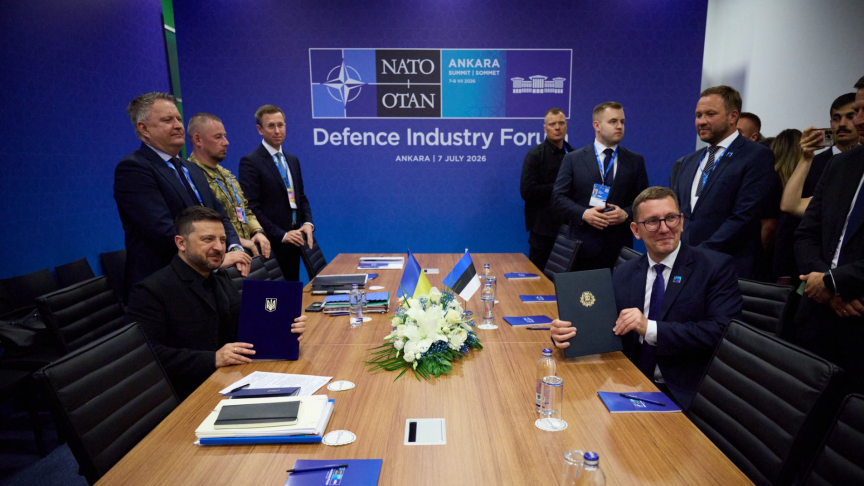
Estonia and Ukraine have signed a new drone cooperation agreement aimed at expanding defence industry collaboration, supporting joint production projects, and strengthening technological cooperation between the two countries.
The agreement was signed by Estonian Prime Minister Kristen Michal and Ukrainian President Volodymyr Zelenskyy during a bilateral meeting on the sidelines of the NATO Summit in Ankara.
The partnership focuses on cooperation in unmanned systems while also promoting knowledge exchange, technology development, industrial collaboration, and the sharing of expertise in information technology, cybersecurity, and defence.
According to the Estonian government, the agreement creates opportunities to combine Ukraine’s wartime experience in drone development with the capabilities of Estonia’s defence industry, while also contributing to stronger air defence capabilities.
Prime Minister Michal noted that Ukraine has developed one of the world’s most competitive defence industries under wartime conditions. He said the agreement expands opportunities for cooperation with Estonian industry and enables the application of Ukrainian defence technologies to strengthen Estonia’s own defence capabilities.
Under the agreement, Ukraine will be able to export defence products to Estonia, while Estonia may procure Ukrainian capabilities or jointly develop and manufacture new systems tailored to the operational requirements of the Estonian Defence Forces.
Estonian Defence Minister Hanno Pevkur said the agreement will allow Estonian-Ukrainian joint ventures to establish production in Estonia, with Ukraine providing the necessary export licences for selected products. He added that the initiative will help strengthen both Estonia’s defence industry and national defence capabilities.
The two countries are also establishing a steering group to identify and advance joint production projects under the “Build with Ukraine” framework.
Estonia reaffirmed its continued support for Ukraine, noting that it allocates more than 0.25% of its GDP annually to military assistance. According to Prime Minister Michal, military aid this year amounts to 0.28% of GDP, while encouraging other NATO allies to make similar commitments.